
Have You Seen This Weed? Identifying Henbit
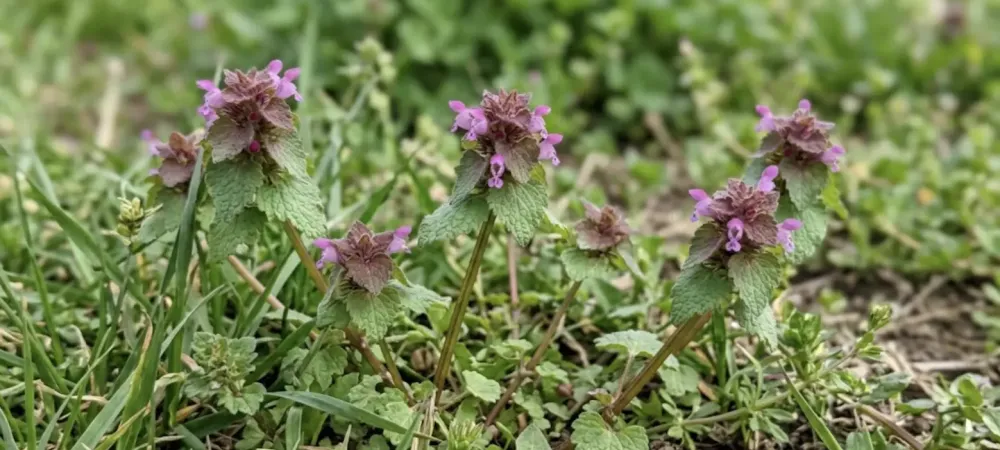
If you've noticed a purple flower weed spreading through your lawn between March and May, you're most likely looking at henbit. It's one of the most common winter annual broadleaf weeds in Oklahoma, and its pink-purple flowers are the easiest way to spot it before it takes over.
How to Identify Henbit
Henbit is a member of the mint family, which explains its mint-like leaves in the early stages, though it doesn't carry any of the actual mint flavor. Mature henbit is easiest to confirm by its square stems, a trait it shares with other plants in the mint family, and its small tubular purple flowers clustered near the top of the plant. Left unchecked, henbit spreads quickly across turf, competing with grass for water and nutrients and breaking up what would otherwise be a uniform lawn.
Other Weeds With Purple Flowers You Might Be Seeing Instead
Henbit isn't the only purple-flowered weed that shows up in Oklahoma lawns, and a few common look-alikes get misidentified as henbit constantly:
- Purple deadnettle is henbit's closest look-alike, also in the mint family with square stems and purple flowers, but its upper leaves are more triangular and tinged purple, and its leaves have short stalks instead of attaching directly to the stem the way henbit's do.
- Ground ivy (creeping Charlie) is another mint-family weed with purple flowers, but it grows low and spreads by trailing vines that root as they go, rather than growing upright like henbit.
- Wild violet has heart-shaped, waxy leaves and small purple flowers, and spreads through underground rhizomes, making it a different management challenge from either henbit or deadnettle.
Getting the identification right matters because treatment timing and approach can vary by weed type. If you're not sure which one you're looking at, that's what we're here for.
How Henbit Is Controlled
Controlling henbit starts with a pre-emergent herbicide, which prevents the seeds from germinating in the first place. Once henbit has already sprouted, a post-emergent herbicide is needed to get it under control instead. The good news is that you don't have to wait for the next pre-emergent window to start managing an active infestation. Post-emergent treatment can begin at any time once henbit has germinated.
Why Your Lawn Might Look Worse Right After Treatment
A flush of new growth in the henbit right after a post-emergent application doesn't mean the treatment failed or that the lawn got fertilized by mistake. Most broadleaf herbicides work by causing the plant's cells to divide and grow uncontrollably, pushing the weed to outgrow its own ability to produce food. That temporary flush is a sign the product is doing exactly what it's supposed to, not a sign something went wrong.
Not sure if what's popping up in your yard is henbit or something else? Call AgriLawn, Inc at 405-680-0077, and we'll help you identify it and figure out the right next step.